
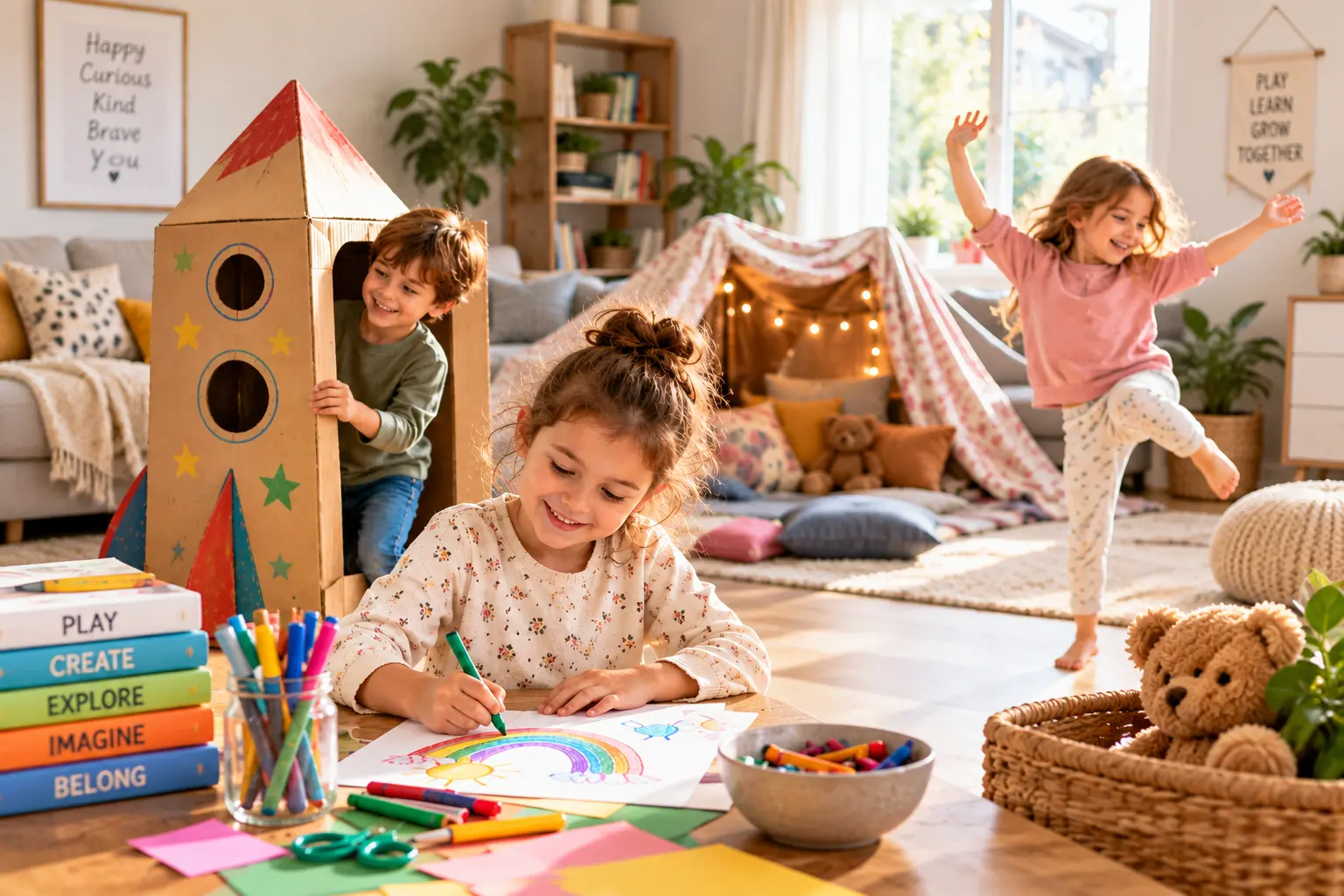
20 Screen-Free Activities for Kids to Do at Home
Looking for screen-free activities for kids to do at home? These 20 easy ideas will keep children busy, learning, creating, and moving without relying on tablets, phones, or TV. Most activities use simple supplies you probably already have around the house, so you can get started without a big shopping trip.
Whether you’re dealing with a rainy afternoon, school break, a long weekend, or simply trying to create more screen-free time at home, these activities give kids something fun and meaningful to do.
Why Try Screen-Free Activities at Home?
Screens can certainly be useful, but kids also benefit from opportunities to play, create, move, imagine, and solve problems on their own.
The best screen-free activities don’t have to be complicated. A cardboard box can become a fort, a few pieces of paper can become a scavenger hunt, and a handful of household objects can turn into an afternoon science experiment.
The goal isn’t to keep children entertained every minute. It’s to give them interesting options that encourage independent play, creativity, movement, problem-solving, and family connection.
Here are 20 easy activities to add to your screen-free activity list.
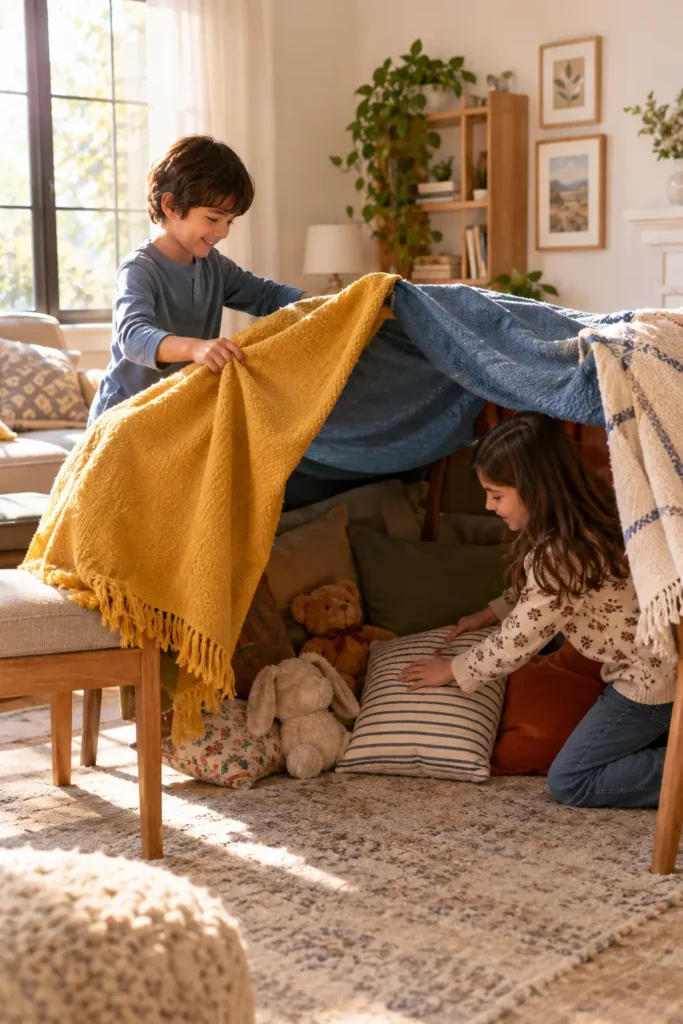
1. Build a Blanket Fort
Few things are more exciting to kids than turning an ordinary room into a secret hideaway.
Give your children blankets, pillows, cushions, and a few chairs and let them design their own fort.
Once it’s finished, the fort can become:
- A reading nook
- A pretend campsite
- A restaurant
- A spaceship
- A secret clubhouse
- A cozy place for stuffed animals
Make it more fun: Let your child create a name and a sign for the fort.
2. Create an Indoor Scavenger Hunt
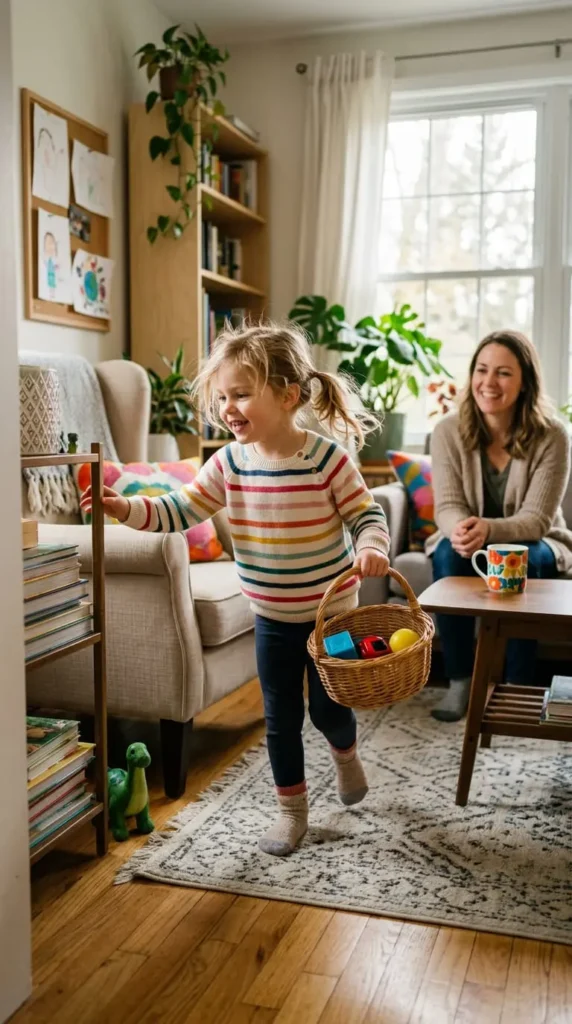
An indoor scavenger hunt is an easy way to turn your home into an adventure.
Write down or read clues such as:
- Find something blue.
- Find something that starts with the letter B.
- Find something soft.
- Find something smaller than your hand.
- Find something that makes a sound.
- Find something you use every morning.
For younger children, use simple picture clues instead of written instructions.
Bonus idea: Give children a basket and challenge them to find five objects that match the clues.
3. Make a DIY Obstacle Course
Kids need movement, even when they’re stuck indoors.
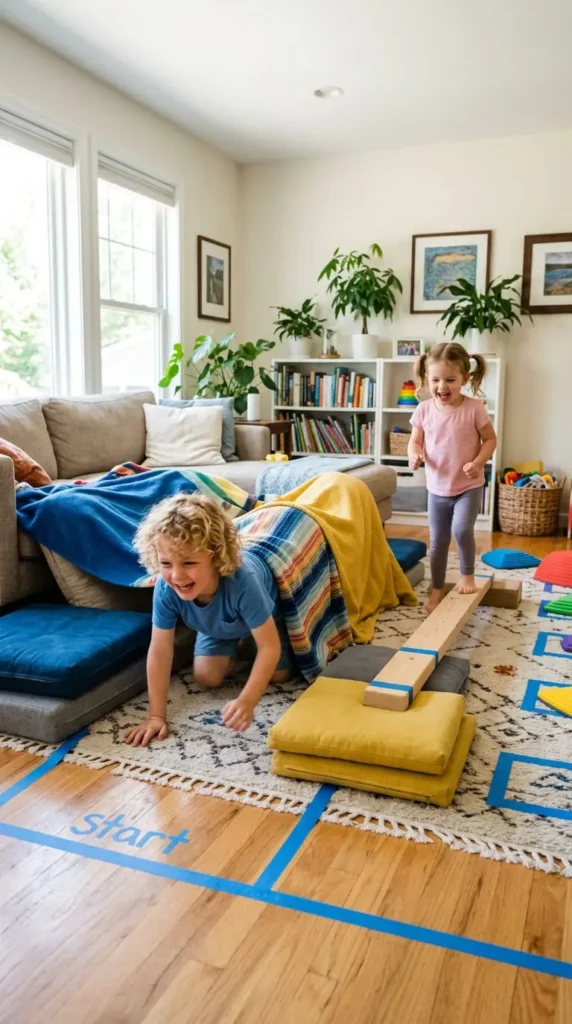
Use pillows, cushions, blankets, painter’s tape, boxes, and chairs to create a simple obstacle course.
For example:
- Crawl under a chair.
- Walk along a tape line.
- Jump over a pillow.
- Crawl through a blanket tunnel.
- Toss a soft ball into a basket.
- Finish with five jumping jacks.
Make the course easier for younger children and more challenging for older kids.
Safety tip: Remove anything sharp or unstable and avoid activities that require children to climb on furniture.
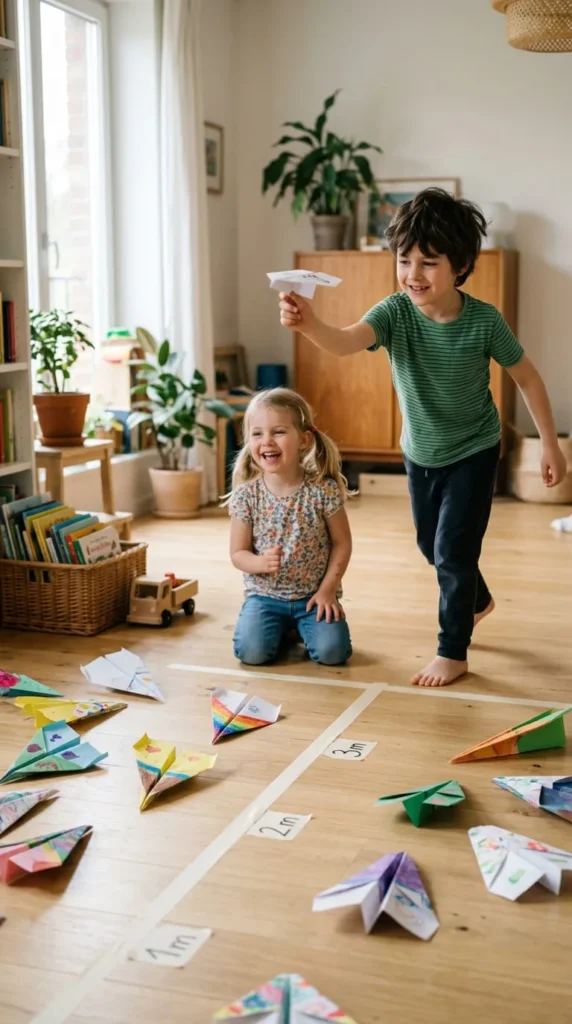
4. Have a Paper Airplane Challenge
Grab a few sheets of paper and have a paper airplane competition.
Kids can experiment with different designs and test:
- Which airplane flies the farthest?
- Which stays in the air the longest?
- Which airplane lands closest to a target?
- Which design is easiest to make?
This simple activity combines creativity, construction, experimentation, and problem-solving.
Try this: Mark a starting line with tape and measure the distance each airplane travels.
5. Set Up a Living Room Camping Adventure
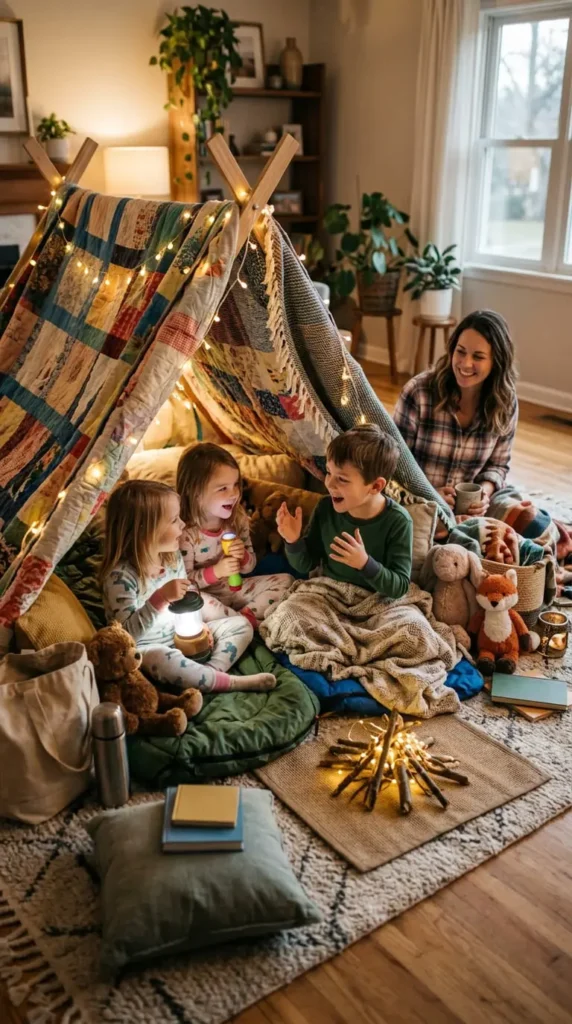
You don’t need to leave home to go camping.
Turn the living room into a pretend campsite using blankets, sleeping bags, pillows, and stuffed animals.
Kids can:
- Build a tent
- Pretend to cook camping food
- Tell stories
- Read camping-themed books
- Make paper binoculars
- Go on a pretend nature walk around the house
If appropriate, have a family picnic on a blanket for lunch.
6. Make a Homemade Sensory Bin
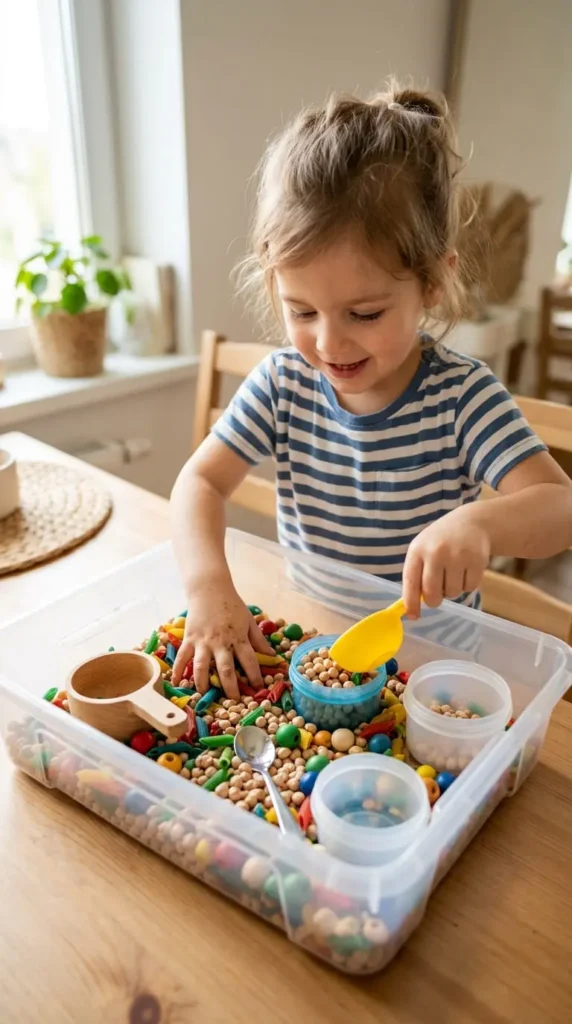
Sensory play can be simple and inexpensive.
Fill a container with a child-safe material such as dry rice, pasta, or another suitable household filler, then add objects for children to discover.
Depending on your child’s age, you can add:
- Measuring cups
- Spoons
- Small containers
- Toy animals
- Blocks
- Large craft items
Give children a simple challenge such as finding hidden objects, transferring materials between containers, or sorting objects by size.
Important: Choose materials and objects appropriate for your child’s age and supervise closely when there is any choking risk.
7. Have a Freeze Dance Party
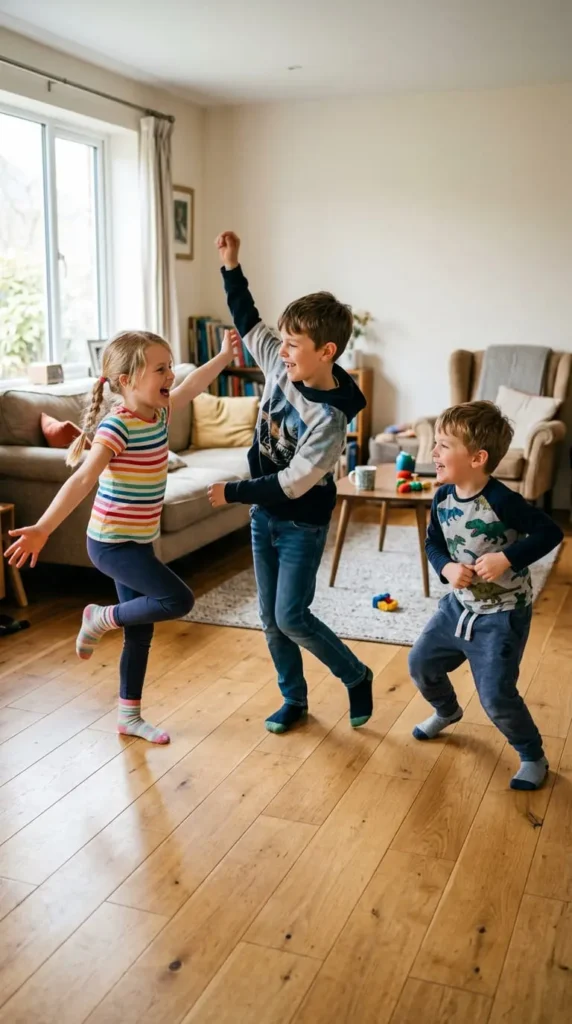
Put on some music and let everyone dance.
When the music stops, everyone has to freeze.
Add extra challenges:
- Freeze like a superhero.
- Freeze like an animal.
- Freeze in a silly pose.
- Freeze with one foot in the air.
This is a simple way to get kids moving without needing special equipment.
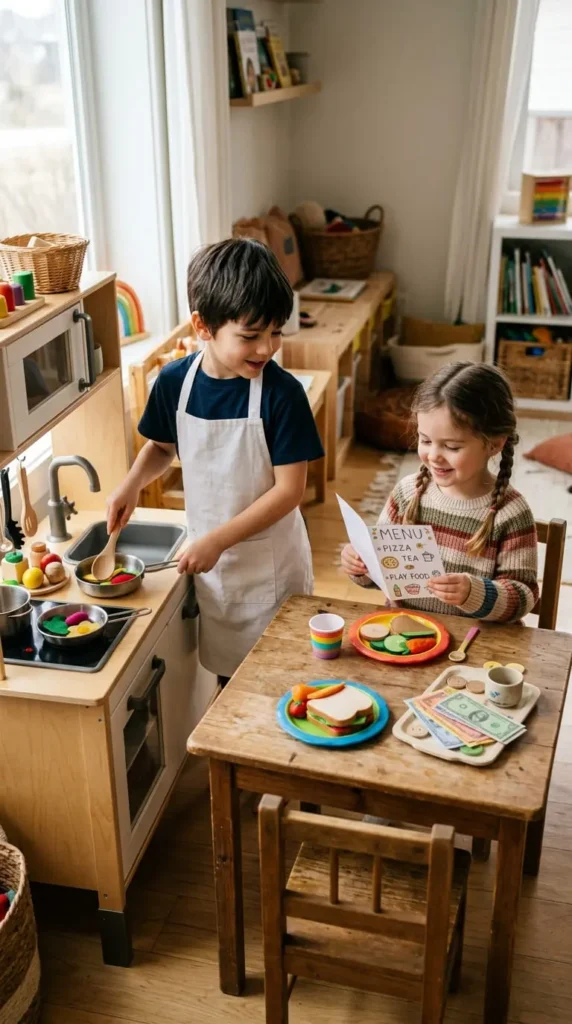
8. Create a Pretend Restaurant
Turn the kitchen or dining room into a pretend restaurant.
Kids can create:
- A restaurant name
- A menu
- Prices
- Table numbers
- Special offers
- A chef’s hat
- Play money
One child can be the chef while another acts as the server or customer.
Older children can practice writing menus and adding prices, while younger children can focus on pretend play.
9. Go on a Household Color Hunt
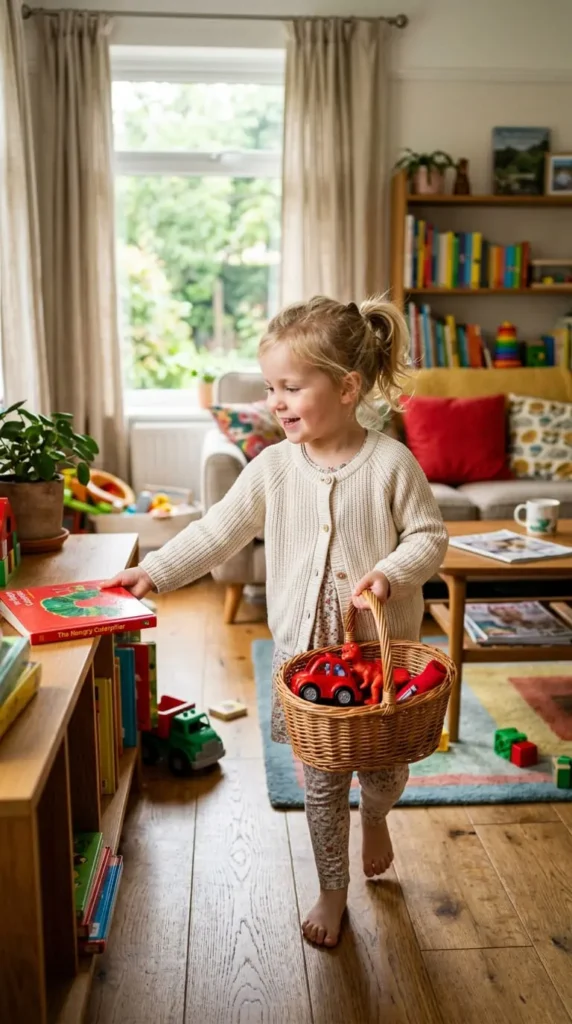
Choose one color and challenge your child to find objects around the house that match it.
For example:
Today’s color: Red
Can you find:
- A Red toy?
- A Red book?
- A Red piece of clothing?
- Something Red in the kitchen?
For older children, turn it into a timed challenge.
For younger children, make it a simple color-recognition game.
10. Build With Cardboard Boxes
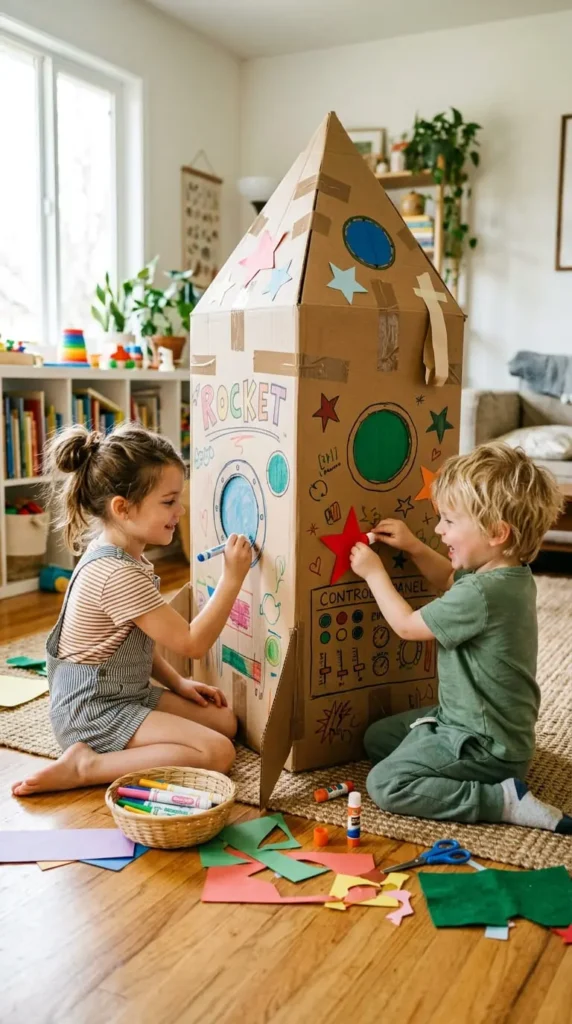
Don’t throw away that cardboard box just yet.
A large box can become almost anything:
- A rocket ship
- A car
- A house
- A grocery store
- A robot
- A puppet theater
- An airplane
Give children crayons, washable markers, paper, and tape and let their imagination take over.
Parent tip: You don’t need to provide a finished craft. Sometimes giving children an open-ended box and letting them decide what it becomes creates more imaginative play.
11. Make a DIY Indoor Bowling Game
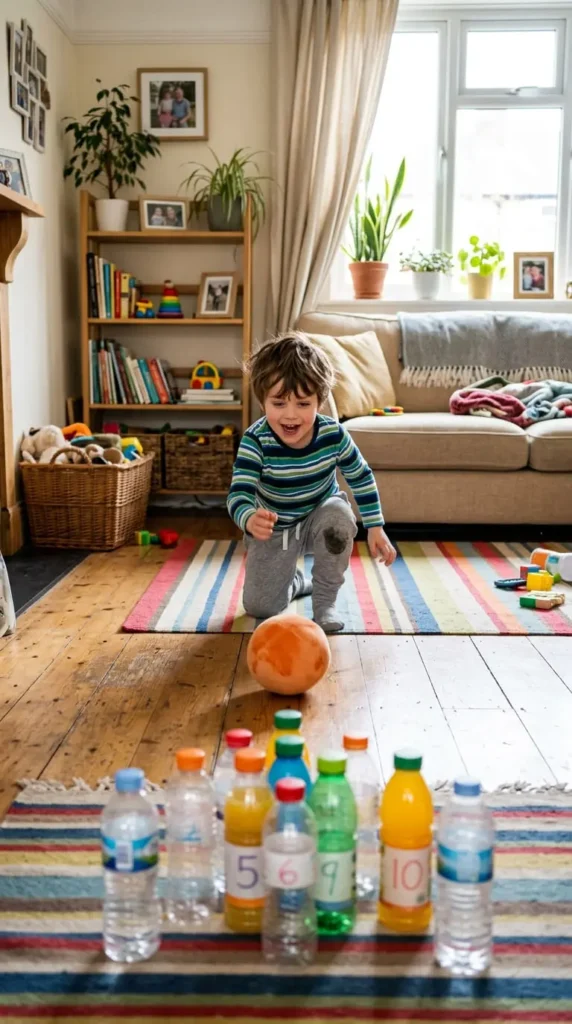
Create a bowling game using plastic cups, empty bottles, or other safe lightweight containers.
Line them up and let children roll a soft ball toward them.
Older kids can keep score.
You can even turn it into a math activity:
Round 1: How many did you knock down?
Round 2: How many are left?
Round 3: How many did you knock down altogether?
This turns a simple game into an opportunity to practice counting and addition.
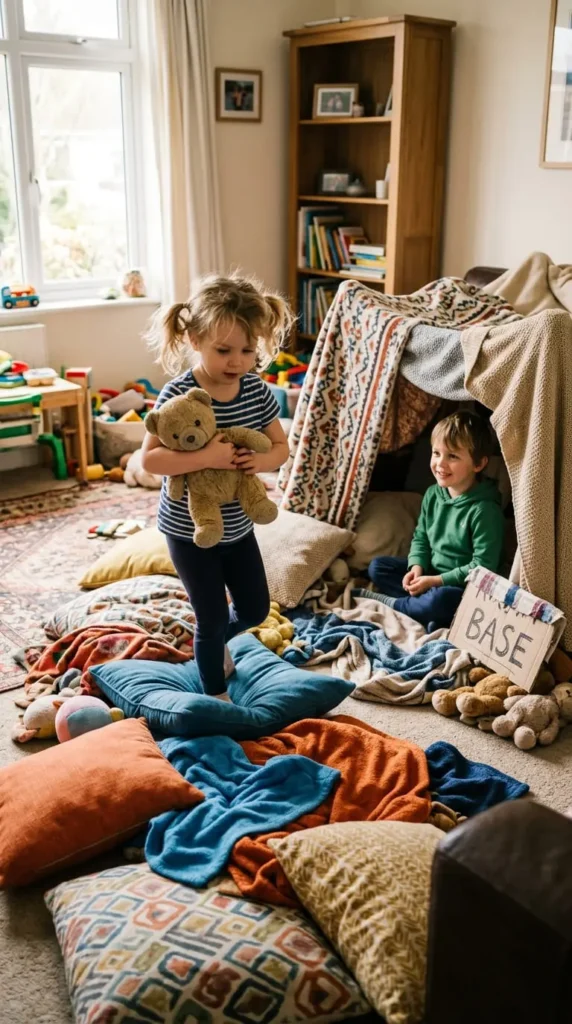
12. Have a Stuffed Animal Rescue Mission
Gather stuffed animals around the room and create a pretend rescue mission.
For example:
“The animals are trapped! Can you rescue them and bring them safely back to base?”
Children can crawl under tables, walk along a taped path, carry animals through an obstacle course, and build a safe shelter for them.
This combines pretend play with movement and problem-solving.
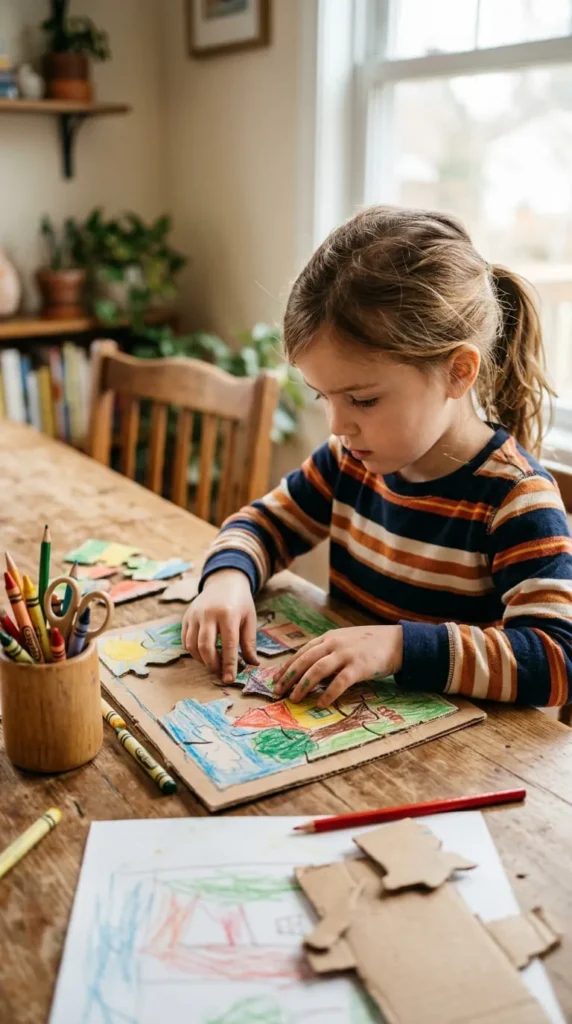
13. Create a Homemade Puzzle
Make your own puzzle with paper or cardboard.
Draw a picture together, then cut it into several large pieces.
Younger children can have a simple 4–6 piece puzzle.
Older children can create more complicated designs with smaller pieces.
Make it educational: Write letters, numbers, sight words, or simple math problems on the pieces.
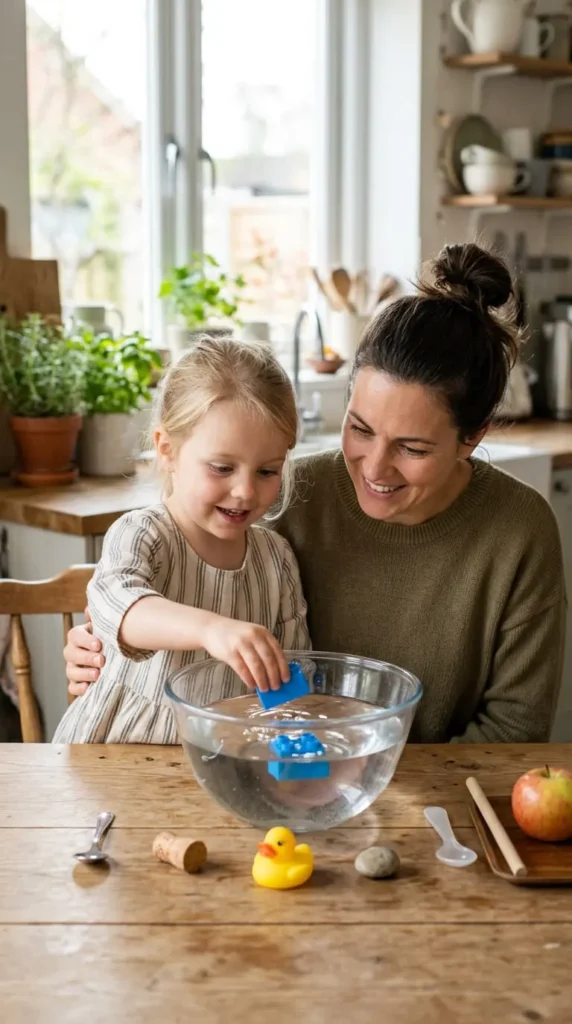
14. Set Up a Kitchen Science Experiment
You don’t need a science kit to introduce children to simple experiments.
One easy activity is a sink-or-float experiment.
Fill a container with water and gather several safe household objects.
Before putting each object in the water, ask:
“Do you think it will sink or float?”
Then test the prediction.
Make a simple chart:
| Object | Prediction | Result |
| Spoon | Sink | ? |
| Plastic toy | Float | ? |
| Small ball | Float | ? |
| Block | ? | ? |
This encourages children to make predictions, observe results, and talk about what happened.
Safety: An adult should choose the objects and supervise the experiment.
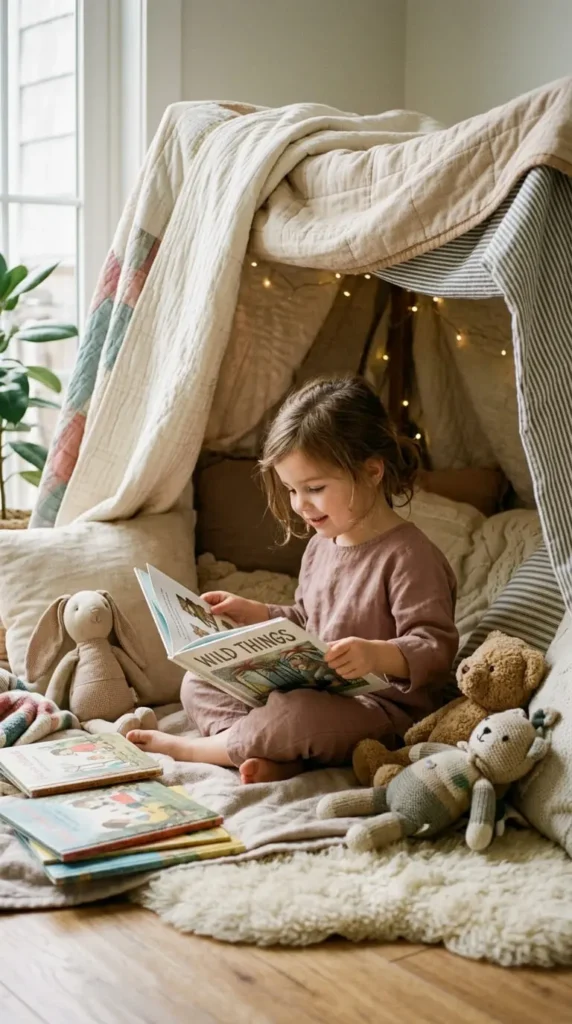
15. Make a Reading Fort
Combine reading time with imaginative play by creating a cozy reading space.
Use:
- Blankets
- Pillows
- Stuffed animals
- Books
- A small basket
Let your child choose several books and spend some quiet time reading inside the fort.
For children who don’t yet read independently, ask them to look at the pictures and tell you what they think is happening.
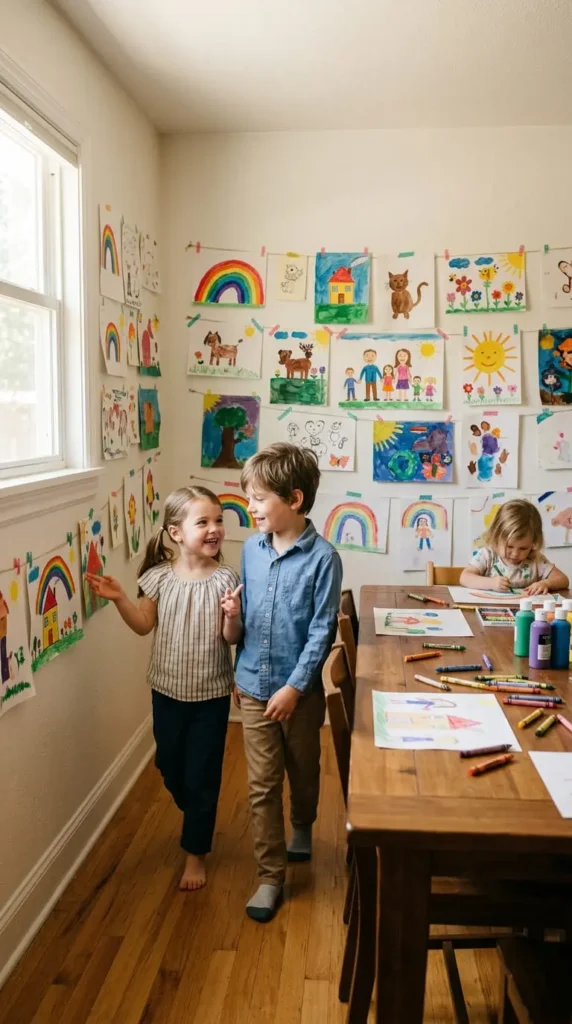
16. Create a Family Art Gallery
Give each child paper and art supplies and let them create their own artwork.
When everyone is finished, display the artwork around one room.
Add:
- Artist names
- Artwork titles
- A pretend exhibition date
Then have a family “gallery walk.”
Ask questions such as:
- What inspired your picture?
- What’s your favorite part?
- What would you add next time?
- What should we call your artwork?
This turns ordinary drawing into a memorable family activity.
17. Make a DIY Memory Game
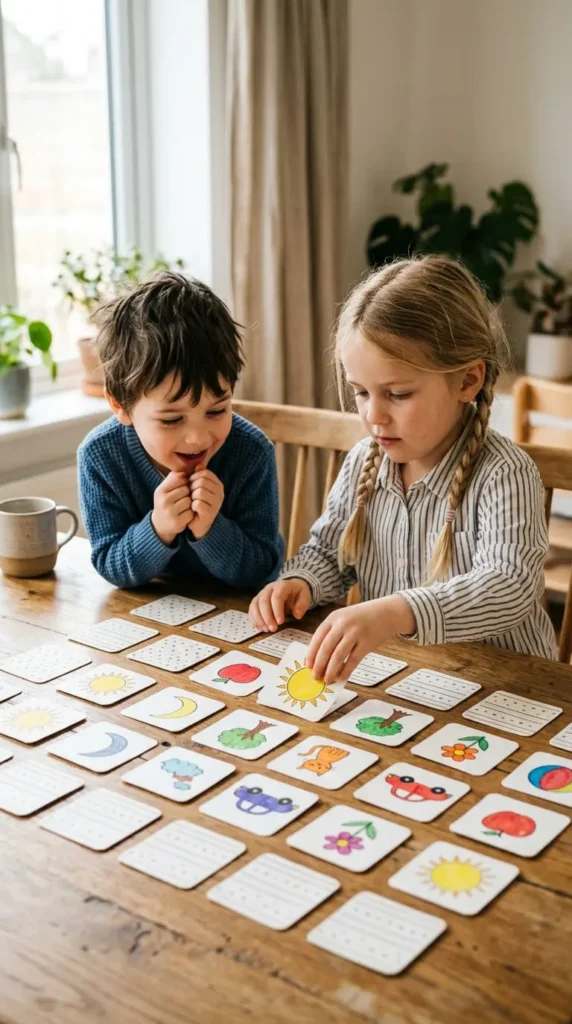
Create a simple matching game using pieces of paper.
Cut paper into equal-sized cards and draw matching pictures on pairs.
For example:
- Two stars
- Two hearts
- Two cats
- Two trees
- Two houses
Place the cards face down and take turns turning over two cards.
If they match, keep the pair.
If they don’t, turn them back over and let the next player try.
This simple game encourages memory, concentration, and turn-taking.
18. Have a Dance-and-Move Challenge
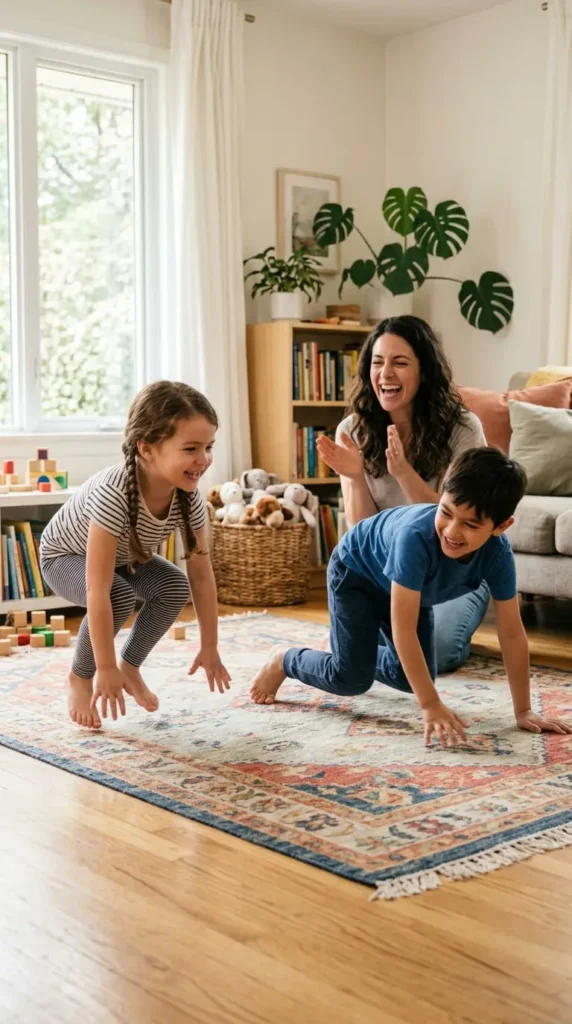
Create a list of silly movements and let children choose one at a time.
Try:
- Hop like a frog
- Walk like a penguin
- Crawl like a bear
- Jump like a kangaroo
- Spin like a ballerina
- March like a soldier
- Move like a robot
Write the movements on slips of paper and put them into a bowl.
Children can take turns choosing a challenge.
19. Create a “Boredom Jar”
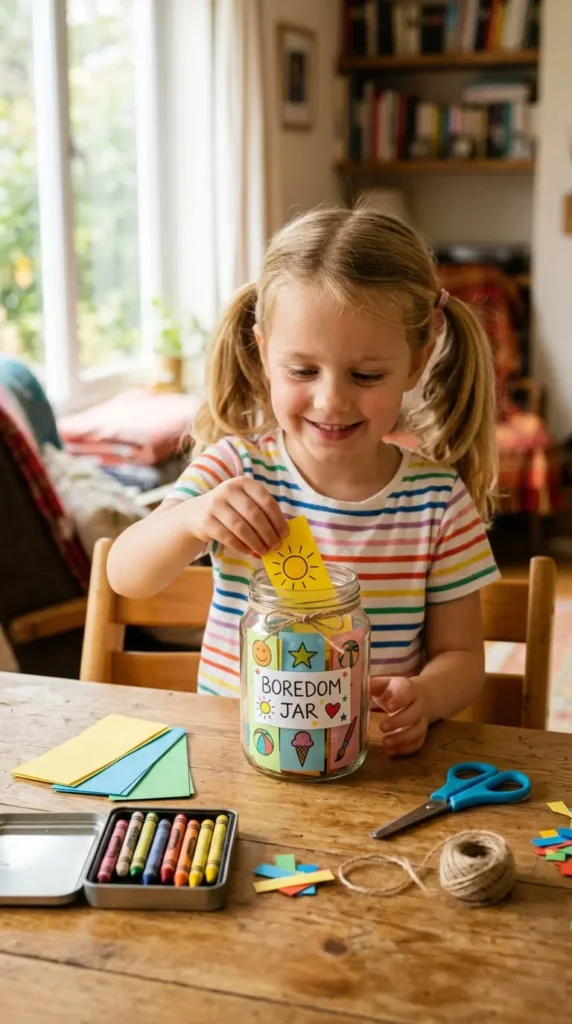
Instead of hearing “I’m bored!” every afternoon, create a boredom jar together.
Write simple activities on small pieces of paper and put them into a jar.
Ideas include:
- Build a fort
- Draw a picture
- Read a book
- Make a paper airplane
- Do a puzzle
- Have a dance party
- Build something with blocks
- Make a snack with an adult
- Do a scavenger hunt
- Play a board game
When your child doesn’t know what to do, they can choose one activity from the jar.
Make it personal: Let your children contribute their own ideas to the jar.
20. Start a Family Tradition
Not every screen-free activity needs to be complicated.
Choose one simple activity that your family can repeat regularly.
For example:
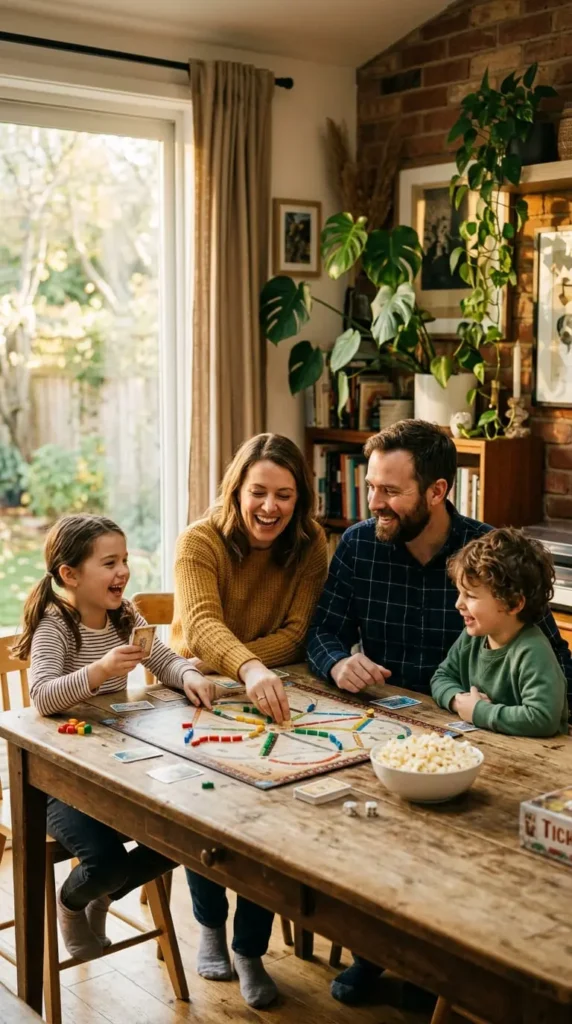
- Friday family game night
- Saturday morning pancake breakfast
- Sunday afternoon craft time
- Family reading hour
- Monthly indoor camping night
- Weekly family walk
- Homemade pizza night
Children often remember these repeated family traditions more than expensive outings.
The activity itself doesn’t have to be perfect. What matters is creating something your family can look forward to doing together.
How to Make Screen-Free Time Easier
If your children are used to spending a lot of time on screens, don’t feel like you have to eliminate screens overnight.
Instead, make screen-free activities easy to start.
Keep a small activity basket somewhere accessible with items such as:
- Paper
- Crayons
- Coloring supplies
- Puzzles
- Building blocks
- Children’s books
- Play dough
- Cardboard
- Scissors appropriate for your child’s age
- Stickers
You can also create a simple screen-free activity station where children know exactly where to find their supplies.
The less preparation an activity requires, the more likely you’ll actually use it on a busy day.
How to Choose the Right Activity for Your Child
Different activities work for different ages and personalities.
For toddlers
Focus on:
- Sensory play
- Simple sorting
- Movement games
- Large puzzles
- Pretend play
- Water play with close supervision
For preschoolers
Try:
- Scavenger hunts
- Crafts
- Obstacle courses
- Pretend restaurants
- Simple science experiments
- Building activities
For school-age children
Try:
- Paper airplane challenges
- DIY puzzles
- Science experiments
- Cooking activities with an adult
- Building projects
- Board games
- Writing and drawing challenges
The best activity is usually one that is just challenging enough without becoming frustrating.
Create a Screen-Free Activity Rotation
You don’t need 20 activities every day.
Instead, choose a few activities from different categories.
For example:
Monday: Creative activity
Tuesday: Movement activity
Wednesday: Sensory activity
Thursday: Educational activity
Friday: Family game
Saturday: Outdoor activity
Sunday: Family tradition
This keeps things interesting without requiring you to constantly invent new activities.
Final Thoughts
Screen-free time doesn’t have to mean expensive toys, elaborate crafts, or hours of preparation.
Some of the best screen-free activities for kids to do at home use things you already have: blankets, paper, cardboard boxes, books, pillows, cups, and a little imagination.
The goal isn’t to keep your children occupied every second. It’s to give them opportunities to create, move, explore, imagine, solve problems, and connect with the people around them.
Start with one activity today. Save this list for the next rainy afternoon, school holiday, or “I’m bored!” moment—and come back whenever you need a fresh idea.